
Healthcare Management System
Comprehensive healthcare management platform with patient records, appointment scheduling, and telemedicine capabilities.
Vue.js
Python
Django
PostgreSQL
Docker

Project Overview
As developers, we often build systems for a general audience. We optimize for speed, user experience, and scalability. But what happens when the stakes are elevated? When the data you're managing isn't just a product ID or a user's profile picture, but someone's medical history? This is the world of the Health Management System (HMS), and it's a fascinating, challenging, and deeply rewarding domain for any developer.
I've spent the last year working on an HMS, and it's been a masterclass in building with purpose. This isn't just about writing clean code; it's about building a digital ecosystem that can genuinely improve patient care, streamline operations, and ultimately, save lives.
More Than a CRUD App: The Core Components of an HMS
At its heart, an HMS is an intricate piece of software that manages the administrative and clinical workflows of a healthcare organization. It's not a single application, but a suite of interconnected modules. Our journey involved tackling these key components, each with its own unique technical and ethical considerations:
Patient Management & Electronic Health Records (EHR): This is the foundation. Every patient has a digital record that must be comprehensive, accurate, and easily accessible to authorized personnel.
The Challenge: Data integrity is paramount. A single incorrect entry could have serious consequences. Our backend had to be meticulously designed with robust validation and versioning to track every change to a patient's record.
The Dev Stack: We used a relational database (PostgreSQL) for its strong ACID compliance to ensure data consistency. We also implemented a granular permissions system with Role-Based Access Control (RBAC) to ensure that only doctors, nurses, or administrative staff could access the specific data they needed.
Appointment Scheduling & Reminders: The physical flow of a clinic relies on a digital calendar.
The Challenge: Managing overlapping schedules for doctors, rooms, and equipment is complex. We also had to build an automated, reliable notification system. Missed appointments are a significant issue, both for patient health and a clinic's finances.
The Dev Stack: We built a custom scheduling API with a flexible data model to handle different appointment types and durations. We integrated with third-party services for SMS and email notifications, building a failover system to ensure delivery.
Billing and Financial Management: The business side of healthcare is as complex as the clinical side.
The Challenge: Handling insurance claims, co-pays, and patient billing with transparency and accuracy is a huge undertaking. The system needs to be a source of truth for all financial transactions.
The Dev Stack: We built a robust financial module that tracks every service rendered, generates invoices, and integrates with payment gateways and insurance claim systems. Data security and PCI compliance were critical here.
Reporting & Analytics: An HMS is a goldmine of data.
The Challenge: How do you turn a sea of raw data into actionable insights? Clinic administrators need to understand everything from patient no-show rates to the busiest times of day and the most common diagnoses.
The Dev Stack: We built a data warehouse using an ETL (Extract, Transform, Load) pipeline to pull data from our core systems. We then used a business intelligence (BI) tool to create interactive dashboards and reports. This allows administrators to make data-driven decisions that improve efficiency and patient care.
The Developer's New Mantra: Security, Scalability, and Standards
Building an HMS forces you to confront three fundamental principles that are often just buzzwords in other industries:
Security is not a feature, it's a foundation. Patient data is a high-value target for cybercriminals. Every line of code, every database schema, and every API endpoint must be designed with security in mind. This means data encryption at rest and in transit, regular penetration testing, and a constant vigilance against vulnerabilities.
Scalability is a matter of life and death. An HMS must handle sudden surges in demand—like during a health crisis—without crashing. The system needs to be able to scale horizontally to accommodate more users and data without sacrificing performance.
Standards and Interoperability are critical. Healthcare doesn't happen in a vacuum. Our system needs to be able to "talk" to other systems—like lab machines, pharmacies, and other hospitals—to ensure a patient's data follows them on their care journey. We had to dive deep into standards like HL7 and FHIR to build APIs that could seamlessly exchange information.
This journey has been a testament to the power of technology to solve real-world problems. Building a Health Management System has been one of the most intellectually stimulating and ethically rewarding projects of my career. It's a reminder that as developers, we have the opportunity to build tools that don't just entertain or connect, but truly make a difference in people's lives.
I've spent the last year working on an HMS, and it's been a masterclass in building with purpose. This isn't just about writing clean code; it's about building a digital ecosystem that can genuinely improve patient care, streamline operations, and ultimately, save lives.
More Than a CRUD App: The Core Components of an HMS
At its heart, an HMS is an intricate piece of software that manages the administrative and clinical workflows of a healthcare organization. It's not a single application, but a suite of interconnected modules. Our journey involved tackling these key components, each with its own unique technical and ethical considerations:
Patient Management & Electronic Health Records (EHR): This is the foundation. Every patient has a digital record that must be comprehensive, accurate, and easily accessible to authorized personnel.
The Challenge: Data integrity is paramount. A single incorrect entry could have serious consequences. Our backend had to be meticulously designed with robust validation and versioning to track every change to a patient's record.
The Dev Stack: We used a relational database (PostgreSQL) for its strong ACID compliance to ensure data consistency. We also implemented a granular permissions system with Role-Based Access Control (RBAC) to ensure that only doctors, nurses, or administrative staff could access the specific data they needed.
Appointment Scheduling & Reminders: The physical flow of a clinic relies on a digital calendar.
The Challenge: Managing overlapping schedules for doctors, rooms, and equipment is complex. We also had to build an automated, reliable notification system. Missed appointments are a significant issue, both for patient health and a clinic's finances.
The Dev Stack: We built a custom scheduling API with a flexible data model to handle different appointment types and durations. We integrated with third-party services for SMS and email notifications, building a failover system to ensure delivery.
Billing and Financial Management: The business side of healthcare is as complex as the clinical side.
The Challenge: Handling insurance claims, co-pays, and patient billing with transparency and accuracy is a huge undertaking. The system needs to be a source of truth for all financial transactions.
The Dev Stack: We built a robust financial module that tracks every service rendered, generates invoices, and integrates with payment gateways and insurance claim systems. Data security and PCI compliance were critical here.
Reporting & Analytics: An HMS is a goldmine of data.
The Challenge: How do you turn a sea of raw data into actionable insights? Clinic administrators need to understand everything from patient no-show rates to the busiest times of day and the most common diagnoses.
The Dev Stack: We built a data warehouse using an ETL (Extract, Transform, Load) pipeline to pull data from our core systems. We then used a business intelligence (BI) tool to create interactive dashboards and reports. This allows administrators to make data-driven decisions that improve efficiency and patient care.
The Developer's New Mantra: Security, Scalability, and Standards
Building an HMS forces you to confront three fundamental principles that are often just buzzwords in other industries:
Security is not a feature, it's a foundation. Patient data is a high-value target for cybercriminals. Every line of code, every database schema, and every API endpoint must be designed with security in mind. This means data encryption at rest and in transit, regular penetration testing, and a constant vigilance against vulnerabilities.
Scalability is a matter of life and death. An HMS must handle sudden surges in demand—like during a health crisis—without crashing. The system needs to be able to scale horizontally to accommodate more users and data without sacrificing performance.
Standards and Interoperability are critical. Healthcare doesn't happen in a vacuum. Our system needs to be able to "talk" to other systems—like lab machines, pharmacies, and other hospitals—to ensure a patient's data follows them on their care journey. We had to dive deep into standards like HL7 and FHIR to build APIs that could seamlessly exchange information.
This journey has been a testament to the power of technology to solve real-world problems. Building a Health Management System has been one of the most intellectually stimulating and ethically rewarding projects of my career. It's a reminder that as developers, we have the opportunity to build tools that don't just entertain or connect, but truly make a difference in people's lives.
Project Details
Category
Web Development
Completed
August 2025
Client
MedTech Solutions
Technologies
Vue.js
Python
Django
PostgreSQL
Docker
Related Projects
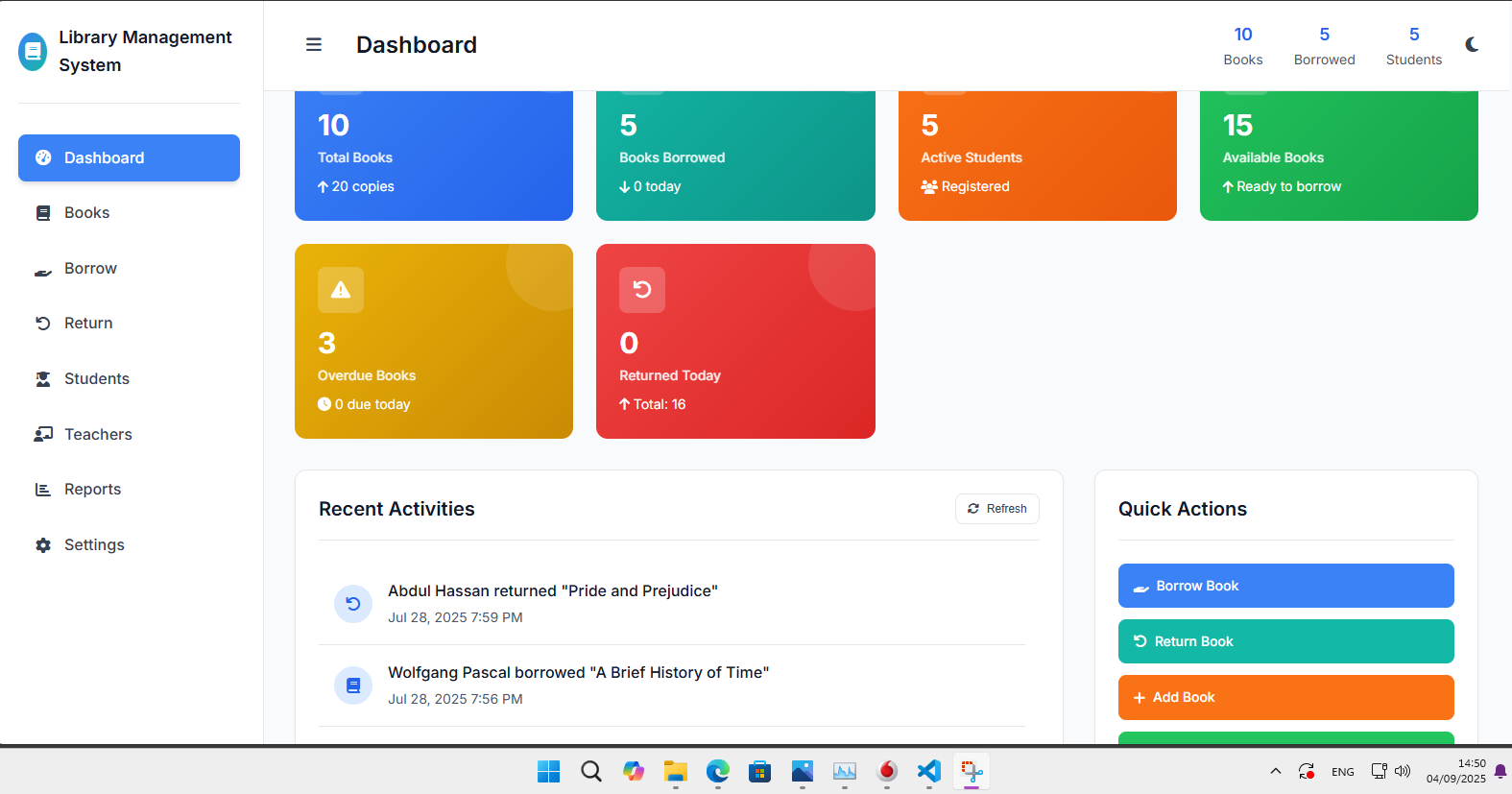
The modern Library management System
The digital age has transformed libraries from quiet, physical spaces into dynamic hubs of informati...
React
Nodejs

Our New Digital Home: How the MEB Website is Empowering a Movement
The MEB Foundation is dedicated to transforming communities by empowering students and improving liv...
React Native
Node.js
MongoDB
Interested in Similar Work?
Let's discuss how I can help bring your project vision to life.
Start Your Project