
The modern Library management System
The digital age has transformed libraries from quiet, physical spaces into dynamic hubs of information. This shift requires a new kind of library management system (LMS)—one that's not just about tracking books but about managing digital resources, providing a seamless user experience, and leveraging data to improve services. For developers, building a modern LMS is an exciting challenge that blends traditional database management with cutting-edge web technologies.
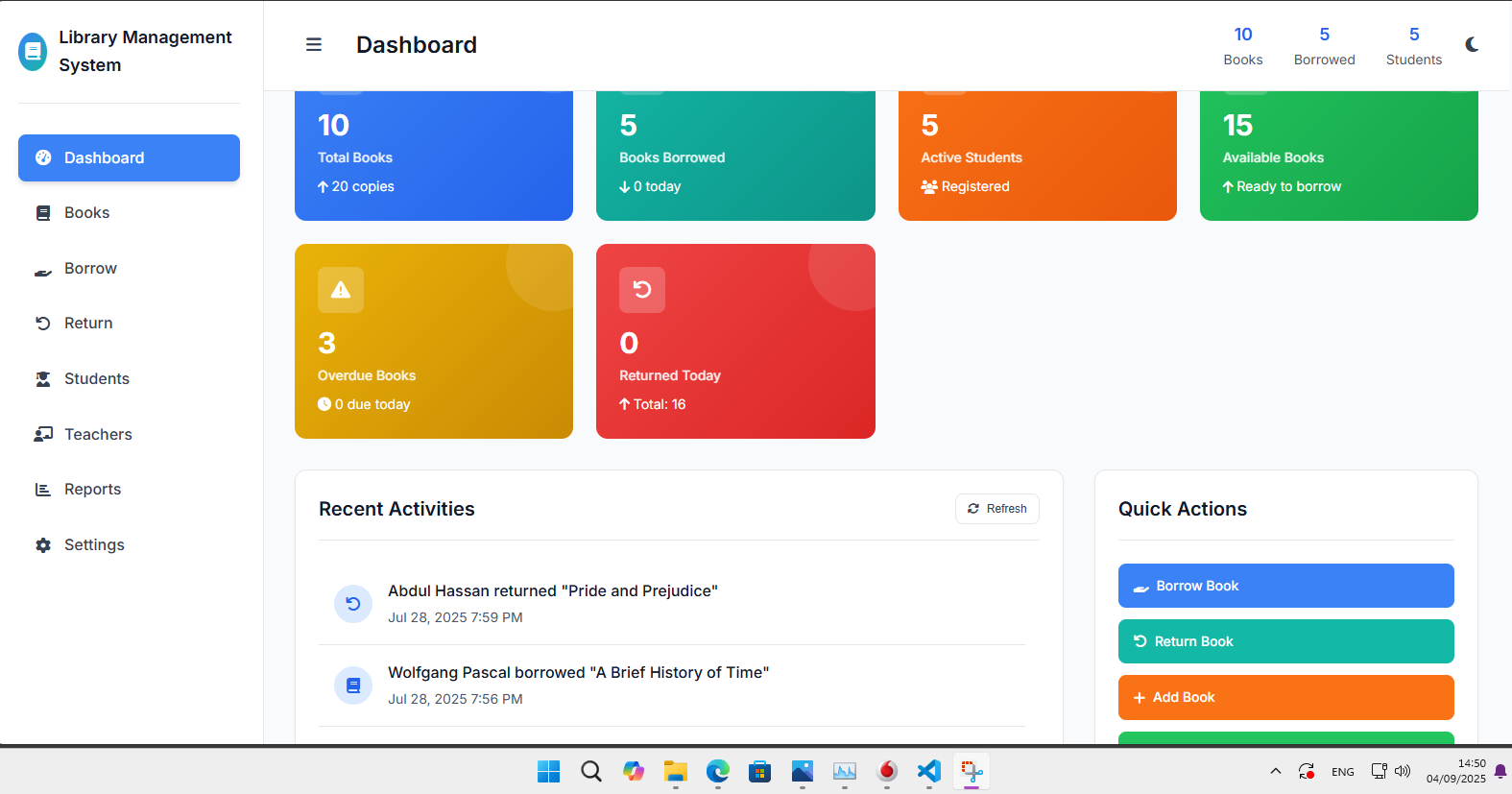
Project Overview
Core Technology Stack
Frontend: The user-facing application is a Single-Page Application (SPA) built with React.js. This provides a smooth, fluid user experience with instant page transitions and real-time updates without constant page reloads. The frontend communicates with the backend via RESTful APIs for a seamless experience.
Backend: The backend is powered by a collection of independent services built with Node.js and the Express.js framework. Each service handles a specific business function (e.g., circulation, cataloging, user management), allowing for flexible development and scalability. The services are containerized using Docker and orchestrated with Kubernetes, ensuring high availability and efficient resource management.
Database: We utilize a polyglot persistence model, using different databases for different purposes.
PostgreSQL is our primary relational database, perfect for managing structured data like book metadata, user accounts, and transaction logs.
MongoDB, a NoSQL database, is used for flexible data storage, such as user reviews, comments, and other dynamic content that doesn't fit a rigid schema.
APIs: Our services communicate through well-defined RESTful APIs. An API Gateway acts as the single entry point for all client requests, handling authentication, routing, and rate-limiting. This adds a layer of security and simplifies the overall architecture.
Key Features and Their Implementation
Online Public Access Catalog (OPAC): A dedicated search microservice indexes book data from PostgreSQL and provides a powerful, fast search experience. User-specific data and recommendations are managed by a separate user microservice.
Circulation Management: The circulation microservice automates check-in/check-out processes, calculates fines, and sends automated notifications. This service is a perfect example of a self-contained unit that can be scaled independently during busy periods.
Digital Resource Integration: The system includes a digital assets microservice that connects to external e-book and journal databases via their APIs. This allows us to display both physical and digital resources in a unified catalog, providing a truly comprehensive collection.
Analytics and Reporting: We use a separate analytics microservice that pulls data from the relational database and feeds it into a Business Intelligence (BI) dashboard. This gives librarians real-time insights into resource usage, patron trends, and collection performance.
Project Details
Web Development
September 2025
MZUMBE SECONDARY SCHOOL
Technologies
Related Projects

Healthcare Management System
Comprehensive healthcare management platform with patient records, appointment scheduling, and telem...

Our New Digital Home: How the MEB Website is Empowering a Movement
The MEB Foundation is dedicated to transforming communities by empowering students and improving liv...
Interested in Similar Work?
Let's discuss how I can help bring your project vision to life.
Start Your Project